Is Indian Culture Slowly Fading in the Age of Western Influence?
Is Indian Culture Slowly Fading in the Age of Western Influence? Whenever we visit places—be it colleges, malls, or cinemas—and whenever we scroll through social media, we clearly encounter Western brands, Western music, Western slang, and even people with a Western mindset. Many people raise serious questions regarding this phenomenon and its impact on Indian cultural influence. While Indian culture is inherently dynamic, the forces of globalization, technology, and Western media—which have now penetrated every household through smartphones and OTT platforms—have created a potent mix of opportunities and risks for our traditions, values, and identities.
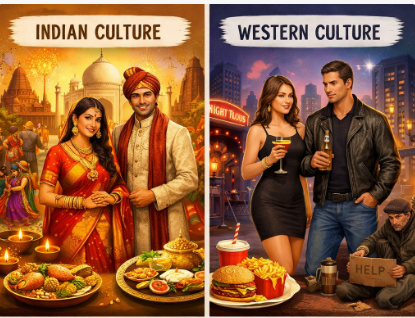
Western influence is not merely about wearing jeans, eating pizza, or watching movies; it encompasses a comprehensive set of ideas, values, and lifestyles that have originated in Europe and North America. A core aspect of this influence is its emphasis on individual freedom, personal choices, and consumerism—manifested through global brands in fashion, gadgets, and entertainment. This influence permeates various spheres—language, education, employment, media, politics, and even religious sentiments. Furthermore, it aligns with a worldview that prioritizes individual personality development, human rights, and equality—factors that are gradually steering us toward a Western cultural paradigm.
Here are some significant indicators suggesting that Indian culture is currently under pressure:
Decline of Traditional Languages and Arts:
In today’s world, English is perceived as the benchmark of success. If someone is deemed successful, it is often assumed that they can speak English fluently; conversely, if someone is proficient only in Hindi or another Indian regional language, they are frequently perceived as being less successful. This creates a direct correlation between English proficiency and professional success. Consequently, this trend reinforces the dominance of Western culture. Moreover, organizations like UNESCO have issued warnings that various Indian languages are currently at risk of endangerment, and that our traditional identities—including classical music and local art forms—are struggling to survive in the current global landscape. In the realm of pop music and social media trends, we also observe a shift in family structures and values.
Traditionally, Indian culture was characterized by the “joint family” system—a structure presided over by a senior head (whether the father or the mother) responsible for the care and well-being of the entire household. However, a transformation has taken place in India; people now increasingly prefer to live independently rather than with their extended families. While it is common in Western culture for parents to live alone, in the traditional Indian context, fathers, mothers, and children typically resided together. Divorce was once an extremely rare occurrence; yet, in today’s world, the divorce rate has risen—a phenomenon largely attributed to the influence of Western culture.
Conclusion:-
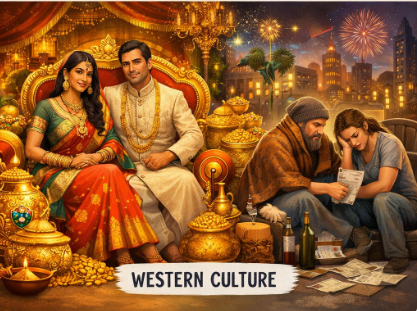
It may appear that Indian culture is literally fading away; however, this does not mean it has been completely destroyed. There are still elements actively working to revive Indian culture, asserting that no outsider possesses the right or the capability to destroy our heritage. Festivals such as Navratri, Diwali, and Holi play a vital role in revitalizing our culture and helping us remain connected to our roots. Even today, a significant number of families in India continue to live in joint households—environments where divorce is considered a negligible concept, where true love prevails, and which serve as focal points for preserving Indian culture. Furthermore, there are specific events and occasions dedicated to promoting and celebrating Indian cultural traditions.
While we acknowledge that Indian culture is indeed slowly fading due to Western influence, we cannot claim that our heritage has been completely obliterated. Westernization is undoubtedly leaving a distinct imprint; yet, while it has opened windows to the wider world, it has also, in some instances, drawn hearts away from their own indigenous heritage.
Read More :-forgetting-indian-culture
Pingback: How Indian Traditions Influence Modern Lifestyle