The Silent Shift: How Change is Affecting Indian Culture
The Silent Shift: How Change is Affecting Indian Culture. If we can’t change over time, we can’t grow. However, there’s an issue. Sometimes, as people change with the times, they forget their roots and values. We need to shift this mindset, so we have launched an initiative to promote this way of thinking. The Vedas, Upanishads, and the Bhagavad Gita highlight the idea of impermanence as a path to wisdom. Civilizations evolved, beliefs changed, and societies redefined themselves over time, yet the essence of India has remained strong. Humanity learns to move forward while respecting the roots that shape its identity. Indian philosophy has always accepted change; it has never resisted it. The Rigveda, one of the oldest texts known to humanity, acknowledges the ever-changing nature of the universe. Creation, dissolution, and renewal occur in a constant cycle. However, within this ongoing movement, Dharma is the principle that upholds order, truth, and righteousness. The Ramayana illustrates how to adapt to change while keeping values intact. Lord Rama faces exile, loss, and hardship. He does not fight against fate but upholds dharma in every situation. His life shows that circumstances can change, but character should remain constant. Dharma isn’t about being rigid; it’s about maintaining a flexible righteousness guided by moral clarity. Similarly, the Mahabharata explores change on a large scale. It addresses political shifts, moral dilemmas, and personal conflicts. Krishna’s advice to Arjuna in the Bhagavad Gita emphasizes that actions should evolve based on time and duty, while still rooted in enduring values like justice, compassion, and selflessness. Here, Dharma is adaptable, not fixed, but it is never abandoned.
Importance of Indian Culture
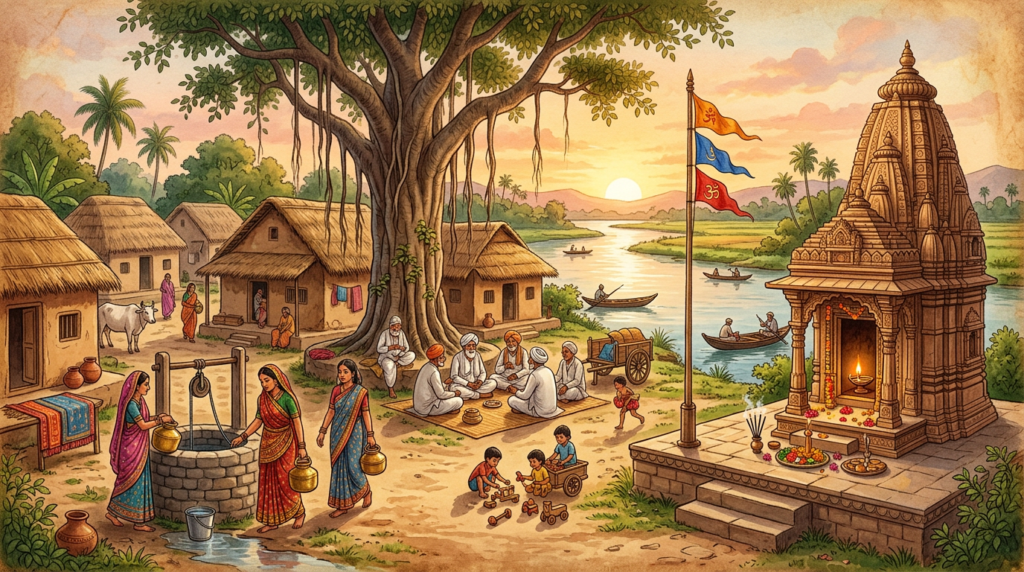
Change is always necessary, but what is most important is the direction of change. We are moving into a new world, and change is the order of the day. We have adopted new lifestyles, new technologies, and new ideologies. This change, though bringing ease and comforts, is slowly moving us away from our own culture.
Earlier, our culture used to be closely related to our values such as respect for elders, joint families, traditional celebrations, and spiritual uprightness. Today, these values have almost disappeared. People have become more inclined towards personal success rather than collective happiness. The influence of Western culture is also one reason for such changes, where modernization is considered equivalent to moving away from one’s own culture.
Balancing Tradition and Modern Life
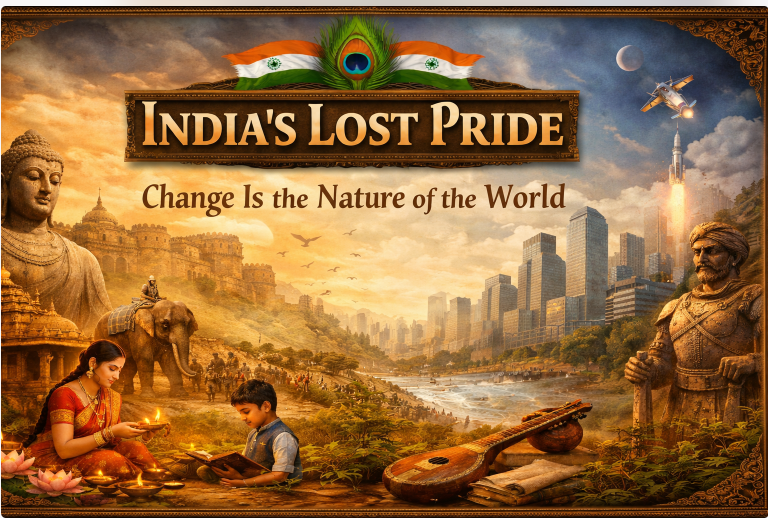
The need of the hour is balance. We do not have to shun modern life altogether, nor do we forget our cultural roots altogether. Our Indian culture has always been a source of inspiration for us by teaching us the importance of harmony – between traditional and modern, new and old.
Simple practices such as celebrating festivals with proper understanding, respecting family values, and learning about our cultural heritage can make a huge difference. We can still live a modern lifestyle while staying connected with our cultural roots through our actions and attitude.
Our culture is not a burden for us; it is our strength. It gives us our identity, values, and a sense of belonging.
Conclusion
Change is truly the law of nature, and it cannot be stopped. But we have the power to decide what to carry forward and what to leave behind. If we blindly follow change, we risk losing our identity. But if we move forward with awareness, we can create a future that respects both progress and tradition.
Read More:- ancient-wisdom-modern-life-indias-cultural-balance